

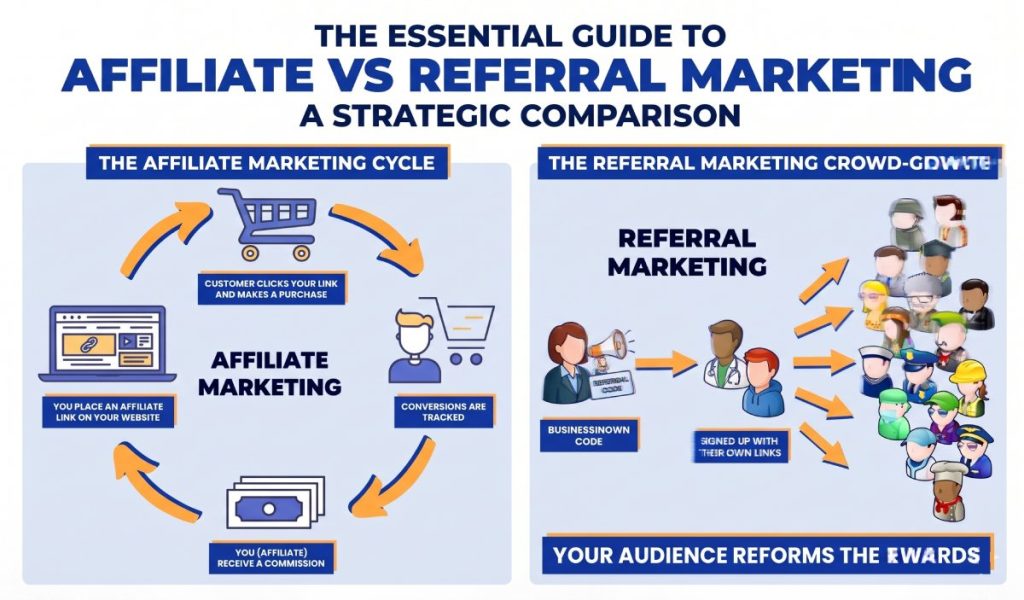
In the ever-expanding universe of digital growth strategies, two models consistently rise to the top: affiliate marketing vs referral marketing. On the surface, both reward third parties for driving new business. Dig deeper, however, and the differences between referral vs affiliate marketing become profound — differences that determine which strategy will actually move the needle for your brand. Whether you’re a SaaS founder looking to activate your loyal user base or an e-commerce brand chasing aggressive scale, this guide from Media angel network breaks down the 7 critical distinctions between these two approaches, the trade-offs of each, and the decision framework you need to choose — or combine — them intelligently.
Defining the Models: Professional Partners vs. Brand Advocates
Before comparing performance metrics and fraud risks, we need to establish what each model actually is. The core of the referral vs affiliate marketing debate comes down to a single question: who is doing the promoting, and why?
What is Affiliate Marketing?
Affiliate marketing is a performance-based channel in which a brand partners with independent third-party publishers — bloggers, content creators, coupon sites, or influencers — who promote the brand’s products or services in exchange for a commission on each sale or lead generated.

These affiliates are professional marketers. They build audiences specifically to monetize them. They use dedicated tracking links, and brands pay only when a conversion occurs. This pay-per-performance model makes affiliate marketing highly scalable and measurable. You need to know How to make money with affiliate marketing without a website 2026
Expert Insight: What the gurus won’t tell you is that affiliate tracking can be a genuine management nightmare without the right software. Between cookie windows, last-click attribution debates, and fraud detection, brands often spend as much on program management as they save on upfront marketing costs.
What is Referral Marketing?
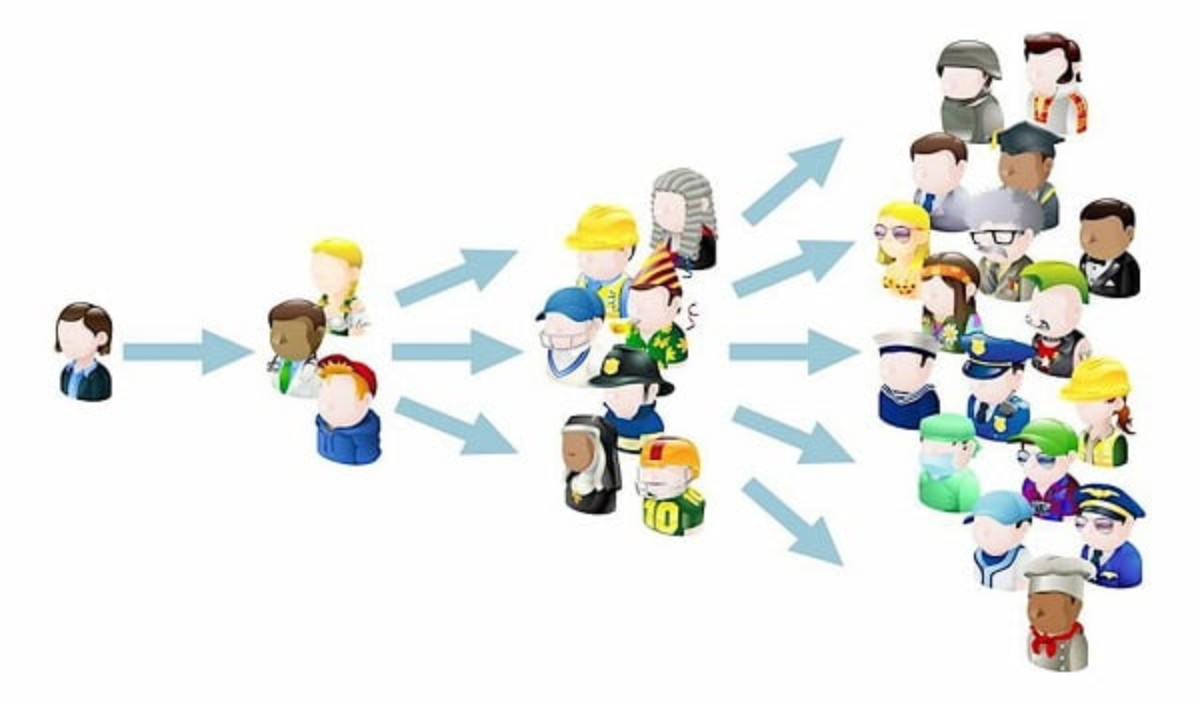
Referral marketing turns your most satisfied customers into your most persuasive sales force. In a referral program, existing customers recommend a product or service to people they know personally — friends, colleagues, family — typically in exchange for a non-cash reward like account credits, discounts, or gift cards.
The key differentiator is the relationship. Nielsen research consistently shows that 92% of consumers trust personal recommendations above all other forms of advertising. Referral marketing weaponizes that trust.
7 Critical Differences in Strategy and Execution
Now let’s get into the substance. When comparing referral marketing vs affiliate marketing across seven strategic dimensions, the divergence is striking.
The Promoter Source: Customers vs. Professional Marketers
Affiliate programs recruit external professionals whose primary goal is monetization. Referral programs activate internal advocates whose primary motivation is helping someone they care about. This single distinction cascades into every other difference on this list.
Relationship Dynamics: Personal Trust vs. Transactional Partnerships
An affiliate’s audience trusts them as a content creator, but they know the affiliate earns money from recommendations. A referred friend trusts the referrer’s motive implicitly. Wharton School research has found that referred customers have a 16% higher lifetime value (LTV) than non-referred customers — a direct consequence of this trust dynamic.
Reward Systems: Cash Commissions vs. Non-Cash Incentives
Affiliates are compensated with cash commissions, typically a percentage of the sale value or a flat fee per lead. Referrers, by contrast, usually receive in-product rewards — credits, discount codes, or tiered perks. This matters structurally: referral rewards are often low-cost to the business but high-value to the recipient.

Audience Reach: Niche/Direct vs. Broad/Scalable
A single affiliate with a 500,000-subscriber newsletter can expose your brand to a massive new audience overnight. Referral programs grow more slowly, expanding through individual network connections. Affiliate marketing wins on speed of reach; referral marketing wins on quality of connection.
Lead Quality: Variable vs. Consistently High
Affiliate traffic quality varies enormously based on the affiliate’s content quality, audience fit, and promotional tactics. Referred leads, arriving via a trusted personal recommendation, convert at significantly higher rates and exhibit lower churn — they were pre-qualified by someone who knows both the product and the prospect.
Brand Control: Managed Messaging vs. Authentic Voice
Affiliates write their own copy, produce their own content, and frame your product through their editorial lens. You provide guidelines, but you can’t control the narrative entirely. Referrers speak authentically from their own experience, which is both an advantage (genuine) and a risk (unpolished).
Fraud Risk: Elevated vs. Low
Affiliate fraud is a documented and costly problem. Click fraud, cookie stuffing, and fake leads cost the industry billions annually. Referral programs, anchored in real personal relationships, are inherently lower fraud-risk — it is hard to fake a genuine friend recommendation at scale.
Side-by-Side Comparison
| Factor | Affiliate Marketing | Referral Marketing |
|---|---|---|
| Who Promotes | Professional marketers, bloggers, influencers | Existing satisfied customers |
| Relationship | Transactional / business partnership | Personal / trust-based |
| Incentive Type | Cash commission (% of sale) | Credits, discounts, gifts |
| Audience Reach | Broad — new audiences at scale | Narrow — personal networks |
| Lead Quality | Variable (depends on affiliate) | Consistently high (word-of-mouth) |
| Conversion Rate | Lower (1–5% typical) | Higher (up to 4× conventional ads) |
| Fraud Risk | Higher (click fraud, cookie stuffing) | Lower (trusted relationships) |
| Brand Control | Lower — affiliates craft their own messaging | Higher — customers speak authentically |
| Best For | Rapid scale, e-commerce, new market entry | SaaS, loyalty-driven brands, high-NPS products |
| Key Metric | EPC (Earnings Per Click), AOV | Viral Coefficient, LTV |
Weighing the Pros and Cons of Each Approach
Understanding the trade-offs of affiliate vs referral marketing is critical before committing budget and engineering resources to either program.
Advantages of Affiliate Marketing
- Rapid scale: Access to established audiences without building them yourself.
- True pay-for-performance: No upfront media spend; pay only when a conversion occurs.
- SEO benefits: High-quality affiliate content can drive organic backlinks and search visibility.
- Flexible commission structures: Customize by product category, margin, or affiliate tier.
- Low-friction launch: Affiliate networks (e.g., ShareASale, CJ Affiliate) provide instant access to thousands of publishers.

Advantages of Referral Marketing
- Superior lead quality: Referred customers convert up to 4× more often than leads from paid channels.
- Built-in trust: Nielsen’s 92% statistic is not an accident — personal recommendations carry unmatched credibility.
- Customer retention loop: Engaged referrers are more deeply invested in your brand and churn less themselves.
- Lower fraud risk: Real relationships make gaming the system structurally harder.
- Brand authenticity: Customers advocate in their own voice, creating genuine social proof.
Common Challenges & Risks
- Affiliate fraud: Click stuffing, fake leads, and attribution manipulation require constant vigilance and dedicated software.
- Management overhead: Recruiting affiliates, approving content, auditing payouts, and managing relationships is a part-time job at minimum.
- Referral program scalability limits: Organic referral loops grow more slowly than affiliate campaigns; they cannot replace top-of-funnel acquisition for brands with small customer bases.
- Incentive fatigue: Over-rewarding can devalue your product; under-rewarding kills participation. Finding the right reward sweet spot requires testing.
Decision Framework: When to Choose Each Strategy
Selecting between affiliate vs referral marketing is not a philosophical debate — it is a business decision driven by your current stage, available resources, and growth objectives. Hot news about How to start High Ticket Affiliate Marketing for everyone in 2026
Best Use Cases for Referral Marketing
- SaaS products with a strong existing user base and measurable NPS scores.
- Brands with high customer satisfaction where loyal users would naturally recommend the product.
- Niche B2B communities where personal relationships and peer credibility drive purchasing decisions.
- Subscription businesses where referred-customer LTV and retention are the primary growth levers.
- Early-stage products that need to build trust before investing in broad affiliate partnerships.

Best Use Cases for Affiliate Marketing
- E-commerce brands with broad product catalogs seeking rapid new-audience penetration.
- Businesses launching in new geographies or verticals where organic reach is limited.
- Brands with small or early-stage customer bases who cannot yet rely on referral volume.
- Performance-focused marketers who need measurable cost-per-acquisition from day one.
- Products with wide mass-market appeal that align well with large content creator audiences.
The Hybrid Model: Why Brands Like Dropbox Use Both
Dropbox is the canonical case study in referral marketing — their famous “give 500MB, get 500MB” program drove a 3,900% growth rate in 15 months. But Dropbox also runs an affiliate program for its business tiers, targeting productivity bloggers and IT-focused publications.
The hybrid approach is increasingly common among scaling businesses: use referral programs to deepen loyalty and acquire high-LTV customers from within your base, while using affiliate programs to systematically expand your addressable market. The two channels complement rather than cannibalize each other.
Tracking Success: Key Metrics for Comparison
Measuring referral vs affiliate marketing performance requires different KPI frameworks — mixing metrics across programs will obscure performance and lead to poor optimization decisions.
Affiliate Metrics
- Conversion Rate: The percentage of affiliate-referred clicks that complete a purchase. Industry benchmarks vary widely (0.5%-5%) by niche.
- EPC (Earnings Per Click): The average revenue generated per 100 affiliate clicks. Top affiliates negotiate placements based on EPC benchmarks.
- AOV (Average Order Value): Understand whether affiliate traffic converts at lower order values, which affects true commission profitability.
- Fraud Rate: Monitor for anomalous click-to-conversion ratios, geographic click patterns, and sudden traffic spikes from unvetted affiliates.
Referral Metrics
- Participation Rate: What percentage of eligible customers actually share a referral link? Healthy programs typically see 10-30%.
- Viral Coefficient (K-factor): The average number of new customers each referrer generates. A K-factor above 1 means the program is self-sustaining.
- Referred Customer LTV: Compare the lifetime value of referred customers against your baseline cohort to quantify the Wharton 16% LTV premium in your own data.
- Time-to-Referral: How quickly do new customers make their first referral? Faster loops indicate stronger product-market fit and more effective referral UX.
The debate around affiliate marketing vs referral marketing is ultimately a false binary. Both are legitimate, powerful, and complementary growth channels — but they are optimized for different moments in a company’s lifecycle and different strategic objectives.

If you are a brand in hyper-growth mode, chasing new market share, affiliate marketing offers the reach and pay-for-performance efficiency to scale rapidly. If you are a brand with an engaged, loyal customer base, referral marketing is the highest-trust, highest-LTV acquisition engine available to you.
The most sophisticated growth marketers do not choose between them. They build referral programs to cultivate their brand advocates, use affiliate programs to penetrate new audiences, and let data — not ideology — determine where to invest the next dollar.
The real competitive advantage lies not in picking the right channel, but in building the operational systems, the tracking infrastructure, and the authentic brand experience that make both channels perform at their ceiling.
