

Most newcomers to affiliate marketing soon realize that $5–$15 per sale won’t change their life. You’d need hundreds of sales each month for modest income. That’s why high ticket affiliate marketing is a game-changer. Instead of small commissions, imagine earning $1,000 from one referral or $3,000 from a single email. These payouts are real, and they explain why many serious marketers shift from low-ticket to high-ticket programs. The catch? It requires different skills, longer sales cycles, and stronger trust-building. Done wrong, it’s frustrating. Done right, it can generate more in a week than most affiliates earn in six months. This guide from Media Angel Network shows what the model is, which products pay most, and how to start fresh in 2026.
What is High Ticket Affiliate Marketing?
If you’ve been hearing this term thrown around but aren’t entirely sure what separates it from regular affiliate marketing, you’re not alone. What is high ticket affiliate marketing, exactly? Put simply, it’s affiliate marketing where the products or services you promote carry a high price tag — and your commission reflects that. What is an affiliate link? how do you earn money from it? here
The Core Difference: Price × Commission Rate = Your Earnings
In standard affiliate marketing, you might promote a $50 product at a 30% commission — earning $15 per sale. In high ticket affiliate marketing, you might promote a $3,000 coaching program at a 40% commission — earning $1,200 per referral.
The traffic you drive is roughly the same. The content effort is roughly the same. The math is dramatically different.
High ticket is typically defined as any offer where the affiliate earns $200 or more per sale. This can come from:
- High-priced products with standard commission rates (e.g., a $2,000 course at 40% = $800/sale)
- Mid-priced products with high recurring commissions (e.g., $500/month SaaS at 30% recurring = $150/month per customer, indefinitely)
- Premium services with flat bounties (e.g., luxury travel, financial services, enterprise software)
Examples of High Ticket vs. Low Ticket
| Category | Low Ticket Example | High Ticket Example |
|---|---|---|
| Online Education | $27 ebook ($5 commission) | $5,000 masterclass ($1,500 commission) |
| Software | $15/mo app ($3 recurring) | $500/mo CRM ($150 recurring) |
| Physical Products | $30 gadget ($3 commission) | $2,000 camera ($100–$200 commission) |
| Services | Freelance marketplace | B2B consulting platform ($500+ bounty) |
Is High Ticket Affiliate Marketing Legit?
This is the question I get asked more than any other, and it deserves a direct, honest answer. Is high ticket affiliate marketing legit? Yes — when it’s structured around genuine, valuable products and transparent business practices, it’s one of the most legitimate forms of online income available today.
Why the Skepticism Exists
The skepticism is understandable. The phrase “high ticket affiliate marketing” has been attached to some genuinely shady programs over the years — particularly multi-level marketing (MLM) schemes dressed up in affiliate marketing language, or “make money online” courses that teach you to sell… other “make money online” courses.
Red flags to watch for:
- Programs where the only product you can promote is the program itself
- Unrealistic income claims with zero proof or transparency
- Upfront “buy-in” fees disguised as “starter kits”
- No verifiable product or service that has value outside the affiliate structure

What Legitimate High Ticket Affiliate Marketing Looks Like
Legitimate high ticket programs include companies like:
- HubSpot — enterprise CRM and marketing software
- Shopify Plus — enterprise ecommerce platform
- Kinsta — premium managed WordPress hosting ($500+ one-time + recurring)
- ClickFunnels — sales funnel software with high recurring commissions
- Luxury travel and finance brands — insurance, credit cards, investment platforms
These are real businesses with real customers who pay because the product genuinely delivers value. Your job as an affiliate is to connect the right audience to the right product — and you get paid well for doing it effectively.
According to the Performance Marketing Association, the affiliate marketing industry generates over $17 billion in revenue annually in the US alone — and the high-ticket segment is one of its fastest-growing areas.
High Ticket Affiliate Marketing Products: What to Look For
Choosing the right products to promote is arguably the most important decision you’ll make as a high ticket affiliate. This isn’t just about commission size — high ticket affiliate marketing products need to be things you can authentically recommend, that have strong retention rates, and that your target audience would actually pay for. 8 SEO steps for affiliate marketing that makes money for publishers
The 5 Criteria for a Great High Ticket Affiliate Product
1. High commission per conversion Look for programs paying $200+ per sale minimum. Recurring programs that pay monthly are even more powerful — a customer retained for 12 months at $150/month earns you $1,800 total.
2. Strong product reputation A product with bad reviews will have high refund rates. Your commission gets clawed back. Worse, your audience loses trust in you. Always vet the product before you promote it.
3. Long cookie duration High ticket sales have longer consideration cycles. A 30-day cookie is the minimum you should accept. Many premium programs offer 90-day or even lifetime cookies.
4. Quality sales support The best high ticket programs do a lot of the selling for you — with dedicated sales teams, webinars, and follow-up sequences. You drive the lead; they close the deal.
5. Alignment with your audience A high commission is worthless if your audience has no use for the product. Relevance always beats commission rate.
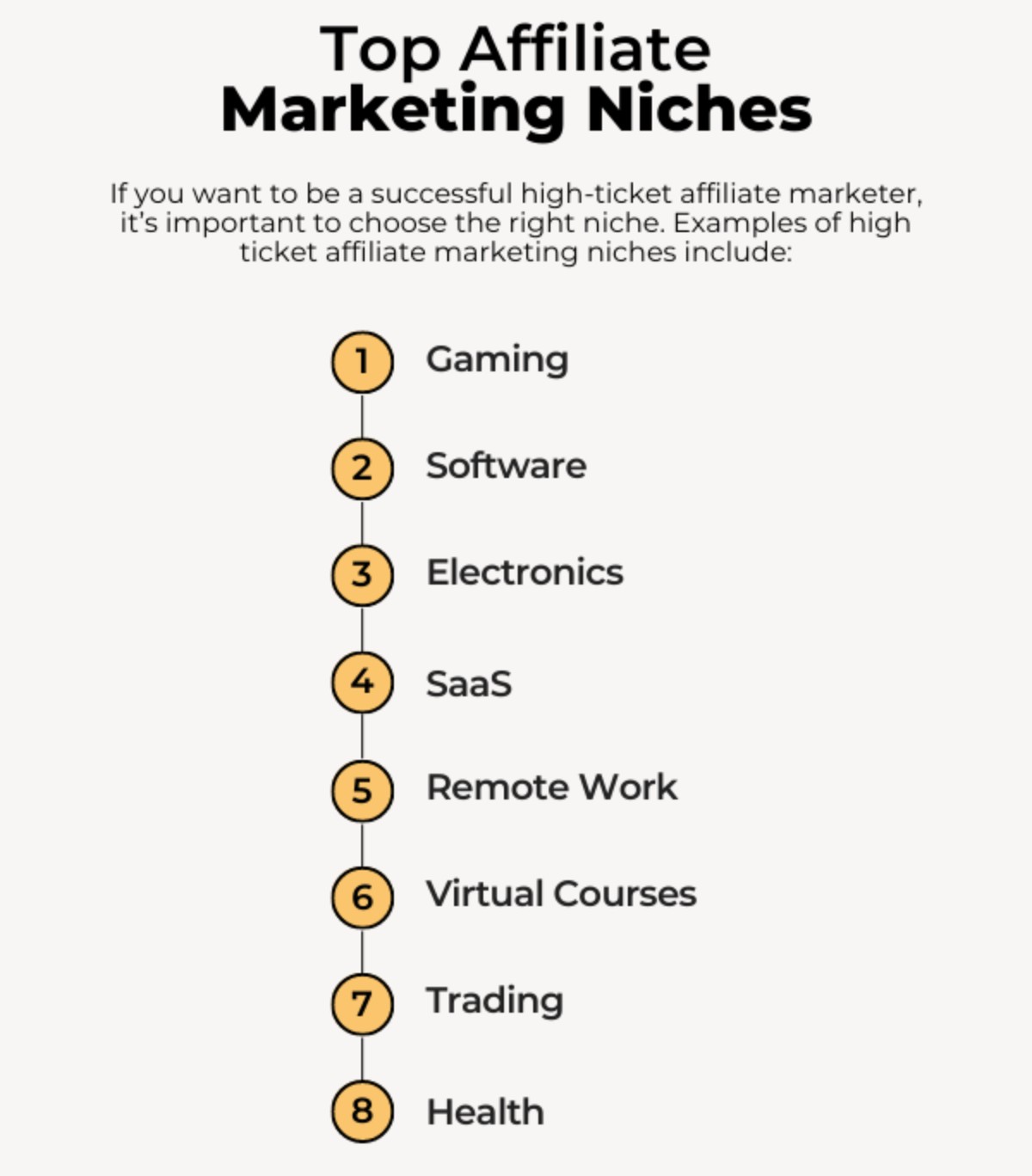
Best High Ticket Affiliate Niches in 2026
- Business software (SaaS) — CRMs, project management, email marketing platforms
- Online education and coaching — business, finance, career, health transformation
- Finance and insurance — credit cards, investment platforms, mortgage products
- Web hosting and tech — Kinsta, WP Engine, Liquid Web
- Travel and luxury — premium hotel booking platforms, credit card rewards programs
- Health and wellness — medical-grade programs, bio optimization, premium supplements
How to Start High Ticket Affiliate Marketing: Step-by-Step
Here’s where we get into the actual mechanics. High ticket affiliate marketing how to start is the right question to be asking — because the process is more structured than most people expect. This isn’t about signing up for a program and pasting links everywhere. It’s about building a real, trust-based business.
Step 1: Choose Your Niche Strategically
Don’t pick a niche because you think it’s profitable. Pick one where:
- You have genuine knowledge, experience, or passion
- There’s a clear buyer intent and purchasing power (B2B audiences, professionals, entrepreneurs)
- High ticket products naturally exist and are already selling well
High-intent buyer audiences include: small business owners, real estate professionals, digital marketers, financial planners, coaches, and executives.
Step 2: Select 1–3 High Ticket Programs to Promote
Start narrow. Promoting too many programs dilutes your authority and confuses your audience. Research programs in your niche, apply, and focus on:
- Commission structure (flat vs. recurring)
- Cookie window
- Affiliate support and resources
- Brand reputation
Resources to find programs: ShareASale, Impact, PartnerStack, CJ Affiliate, and direct brand affiliate pages. More information for Best finance affiliate programs for publishers 2026
Step 3: Build Your Traffic Channel
You need an audience before you can make sales. The two primary channels for high ticket affiliate marketers:
Content Marketing (SEO + YouTube)
- Write detailed, keyword-targeted articles (like this one)
- Create video reviews and tutorials
- Build topical authority over 6–18 months
- Best for: long-term, sustainable, low-cost traffic
Paid Advertising
- Facebook/Meta ads, Google Ads, YouTube pre-roll
- Can generate results faster but requires budget ($50–$500+/day to test effectively)
- Best for: marketers with capital who want to scale quickly
Email List Building
- The most underrated asset in affiliate marketing
- A list of 5,000 targeted subscribers can generate $5,000–$20,000+ per promotion
- Works for both organic and paid traffic models
Step 4: Create Trust-Building Content
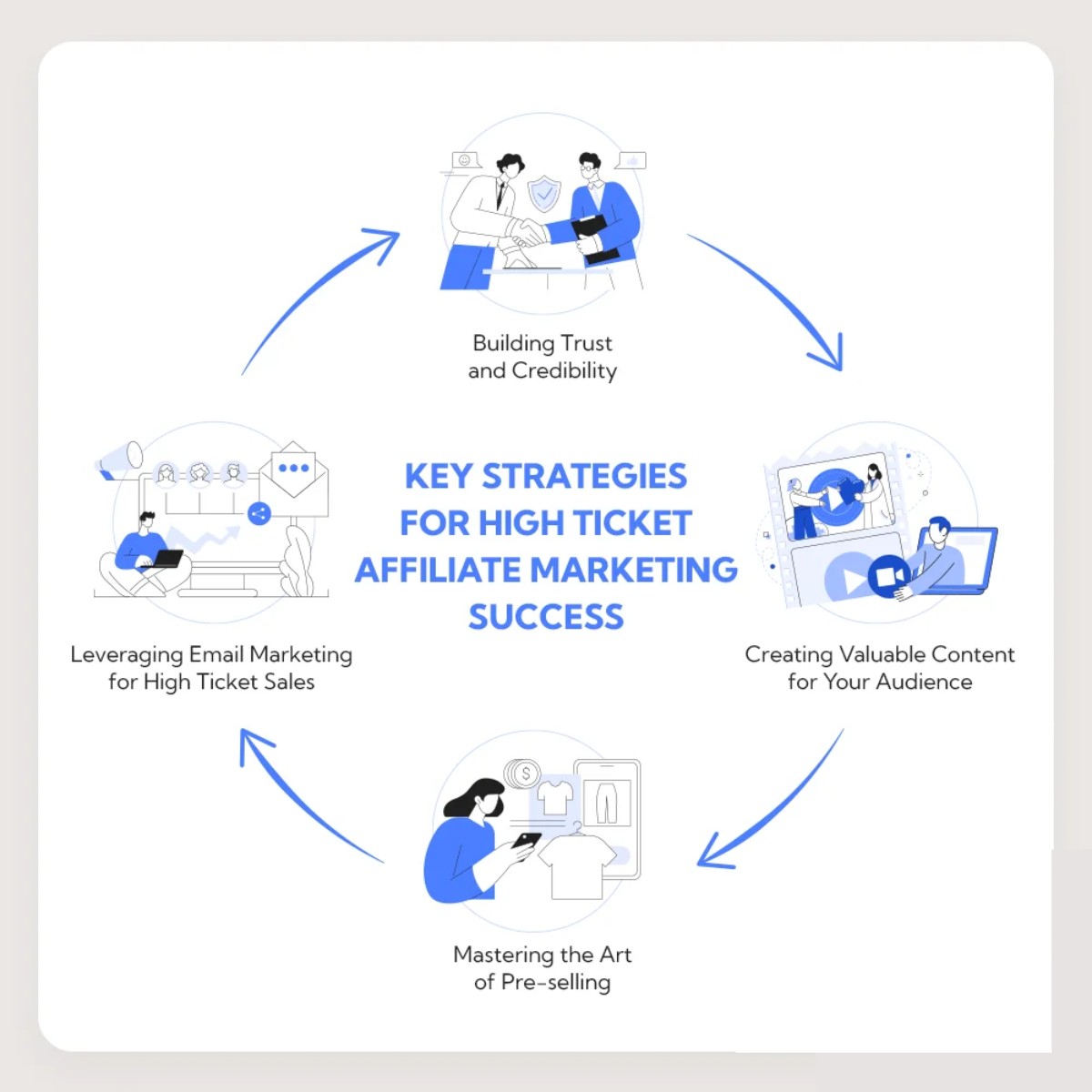
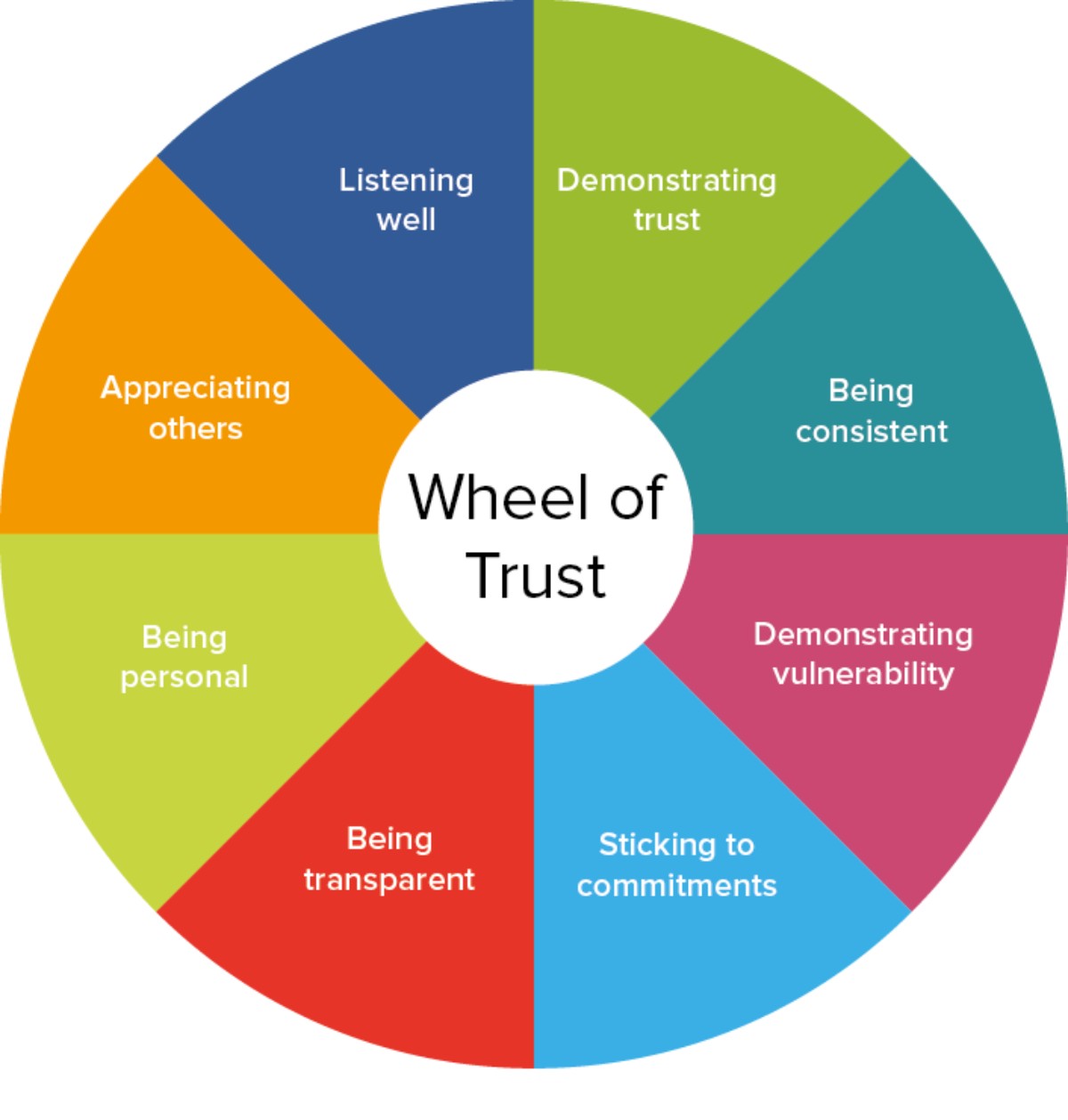
High ticket buyers don’t buy from strangers. Before someone spends $2,000 on a program you recommend, they need to trust you. Build that trust with:
- Honest, detailed product reviews (including drawbacks — this actually builds more trust)
- Case studies and real results
- Comparison articles (“Product A vs. Product B”)
- Tutorial content that demonstrates your expertise
- Email sequences that educate before selling
Step 5: Drive Traffic to a Pre-Sell Asset
Don’t send cold traffic directly to an affiliate offer. Instead, use a “pre-sell” — a landing page, blog post, or video that warms the prospect before they hit the sales page. A warm lead converts at 3–10x the rate of a cold one.
Step 6: Optimize, Scale, and Diversify
Once you have a converting system:
- Double down on what’s working (traffic source, content format, offer)
- Add complementary high ticket programs to the same audience
- Test paid traffic to amplify organic wins
- Build a second content channel (e.g., YouTube + blog)
High Ticket Affiliate Marketing for Beginners: Realistic Expectations
Let’s be honest for a second — because too many “gurus” sell an unrealistic version of this. High ticket affiliate marketing for beginners is absolutely achievable, but it has a learning curve that most people underestimate.
The Realistic Timeline
| Phase | Timeframe | What to Expect |
|---|---|---|
| Learning & Setup | Months 1–2 | No income. Building foundation, studying, choosing niche and programs |
| Content Creation | Months 2–6 | Little to no income. Publishing consistently, building SEO traction |
| First Sales | Months 4–9 | First commissions, often $200–$1,000/month |
| Scaling | Months 9–18 | $2,000–$10,000/month becomes realistic with consistent effort |
| Authority Phase | 18 months+ | $10,000–$50,000+/month for top performers in competitive niches |
These ranges vary enormously based on your niche, traffic channel, and how much time/money you invest. Someone running paid ads can compress this timeline significantly. Someone building SEO content is playing a longer game with more durable results. Best pay per lead affiliate programs for publishers in 2026 you need to know
Skills You Need to Develop
You don’t need all of these on day one, but over time you’ll want to build competency in:
- SEO fundamentals (keyword research, on-page optimization, link building)
- Copywriting (headlines, emails, review articles that convert)
- Content creation (writing, video, or both)
- Analytics (Google Analytics, affiliate dashboard interpretation)
- Email marketing (list building, automation, broadcast campaigns)
The Mindset That Actually Matters
The affiliates who succeed in high ticket aren’t necessarily the most technically skilled. They’re the ones who:
- Treat it like a real business, not a side hustle shortcut
- Stay consistent during the months when results are slow
- Genuinely care about helping their audience make good decisions
- Keep learning and adapting as algorithms and markets change
Common Mistakes That Kill High Ticket Affiliate Earnings
Even experienced marketers make these errors. If you’re wondering why your high ticket campaigns aren’t converting the way you expected, one of these is probably the culprit.
Mistake #1: Promoting Products You’ve Never Used
High ticket buyers are sophisticated. They ask detailed questions, read reviews critically, and can spot generic, surface-level content immediately. If you’re writing a review of a $3,000 coaching program you’ve never personally experienced, it shows — and it destroys the trust you need to convert.
The fix: Invest in the products you promote, or partner with people who have used them and can provide authentic testimonials and case studies.
Mistake #2: Sending Traffic Directly to the Sales Page
This is one of the most expensive mistakes in paid affiliate marketing. Cold traffic sent directly to a high-ticket offer almost never converts profitably. The buyer needs multiple touchpoints — content, social proof, trust — before committing to a large purchase.
The fix: Always use a pre-sell page, opt-in funnel, or content bridge before the affiliate offer.
Mistake #3: Building on Borrowed Land
Too many affiliates build their entire business on one social media platform — and then a single algorithm change wipes out their traffic overnight. This has happened to countless YouTube channels, Facebook groups, and Instagram accounts.
The fix: Own your audience. Build an email list from day one. It’s the only asset in digital marketing you actually own outright.
Mistake #4: Quitting Before the Compound Effect Kicks In
SEO content takes time to rank. Email lists take time to grow. Audience trust takes time to earn. Most beginners quit at Month 3–4, right before their efforts would start producing meaningful results.
The fix: Set a 12-month commitment before evaluating whether the model is “working.” Track leading indicators (traffic, subscribers, click-throughs) rather than just revenue in the early months.
Frequently Asked Questions
How much can you realistically make with high ticket affiliate marketing?
Income varies widely. Beginners can expect $200–$2,000/month in their first 6–12 months. Established marketers in competitive niches commonly earn $10,000–$50,000+/month. The ceiling is largely a function of traffic volume, audience trust, and offer quality.
Do I need a website to do high ticket affiliate marketing?
A website or blog is the most durable and cost-effective foundation, but it’s not the only option. Some marketers build entirely on YouTube, podcasting, or email lists. However, owning a domain and email list provides the most long-term stability.
What are the best high ticket affiliate programs for beginners?
Good starting points include: Kinsta (web hosting), HubSpot (CRM/marketing), Teachable or Kajabi (course platforms), ClickFunnels (sales funnels), and various financial services programs. Look for programs with strong support, long cookie windows, and transparent commission structures.
How long does it take to make your first high ticket commission?
With content marketing (SEO/YouTube), expect 4–9 months. With paid advertising and a solid pre-sell funnel, some marketers make their first sale within 30 days — though this requires ad budget and fast learning.
Is high ticket affiliate marketing different from MLM?
Yes, fundamentally. Affiliate marketing is a one-directional relationship: you promote a company’s product to an outside audience and earn a commission on sales. MLM involves recruiting other sellers into a network structure. The two are not the same, though some bad actors blur this line intentionally.
>>> Related Guide
