

Before diving into the math, it is essential to understand the underlying economics of your lead generation cost. Every campaign you launch requires an investment, and knowing exactly where that money goes sets the stage for scaling profitable channels. In the modern digital landscape, guessing your marketing efficiency is a fast track to burned budgets. Whether you are running a tight ship as a solo affiliate marketer or managing enterprise-level campaigns, you need a firm grip on your metrics. If you find yourself asking, “How do you calculate cost per lead?”, Media angel network is going to break down exactly how to track, calculate, and optimize your costs so you can stop bleeding ad spend and start driving high-quality prospects into your funnel.
What is Cost Per Lead (CPL)?
At its core, CPL is a fundamental marketing metric that measures how cost-effective your campaigns are at generating new prospects. Understanding this number allows you to evaluate the direct impact of your advertising efforts on your sales pipeline.
Cost Per Lead (CPL) represents the exact dollar amount it takes to acquire a user who expresses interest in your product or service by providing their contact information. According to standard definitions (frequently referenced in digital marketing wikis and glossaries), a “lead” is someone who has moved beyond a casual website visitor but is not yet a paying customer. They might have downloaded an eBook, signed up for a webinar, or filled out a consultation form.
Look, here is the reality from the trenches: Not all leads are created equal. An email address collected from a massive, generic iPad giveaway is technically a lead, but it has near-zero commercial intent. A detailed form submission from a decision-maker asking for a software demo is pure gold. While CPL gives you the raw financial efficiency of your lead capture process, it must always be paired with an understanding of lead quality—often categorized into Marketing Qualified Leads (MQLs) and Sales Qualified Leads (SQLs).
How Do You Calculate Cost Per Lead? The Core Formula
If you are wondering how do you calculate cost per lead, the math itself is refreshingly straightforward but requires highly accurate data input. The CPL formula is simply your total marketing spend divided by the total number of new leads acquired during that specific time frame.
The basic formula is:
CPL = Total Marketing Spend / Total New Leads
While the equation is simple, gathering the correct numbers to plug into it is where most marketers make fatal errors. Let’s break down both sides of the equation so you can calculate this with absolute precision.

Identifying Your Total Marketing Spend
To get an accurate number, it is highly recommended to use a MECE (Mutually Exclusive, Collectively Exhaustive) framework to categorize your expenses. This logical approach ensures that every single dollar is accounted for in one—and only one—category, preventing double-counting while ensuring no hidden fees slip through the cracks.
When calculating your spend for a specific campaign or time period, your MECE categories should include:
- Direct Ad Spend: The actual money paid to platforms like Google Ads, Facebook Ads, or LinkedIn Ads.
- Labor and Agency Fees: The cost of the freelancers, agencies, or internal team hours dedicated specifically to running that campaign.
- Software and Infrastructure: Pro-rated costs of your landing page builders (like Unbounce), CRM platforms (like HubSpot), and automation tools.
- Creative Costs: The money spent on copywriters, graphic designers, or video editors to create the campaign assets.
If you only divide your direct ad spend by your leads, you are lying to yourself about your true costs. A $1,000 ad spend that required $500 in design work and $500 in agency management fees is actually a $2,000 total spend.
Tracking Total New Leads
The second half of the formula requires tight tracking. You must ensure that you are only counting net new leads generated by that specific spend. If a user was already in your database from three years ago and they click a new ad to download a whitepaper, that is a re-engagement, not a newly acquired lead. Set up strict UTM parameters and CRM attribution rules to isolate the exact number of fresh contacts your campaign generated.
Why Your Digital Marketing ROI Depends on Accurate CPL
Monitoring this data isn’t just about corporate bookkeeping; it is the absolute linchpin of your overall digital marketing ROI. When you know exactly what a lead costs, you can scale winning campaigns aggressively and cut the losers before they drain your quarterly budget.
Think of your CPL as the vital sign of your marketing health. Without it, you are flying blind. Here is exactly why authoritative marketers obsess over this metric:
- Budget Forecasting and Allocation
If your goal is to generate 500 leads next month, and you know your historical CPL is $40, you instantly know you need a marketing budget of $20,000. It turns marketing from a “hope and pray” expense into a predictable mathematical engine. You can confidently approach your executive team or clients and say, “For every X dollars you give me, I will return Y leads.”
- Channel Comparison
Is LinkedIn Ads better for your business than Google Search? You can’t answer that subjectively. By comparing the CPL across different platforms, you can ruthlessly reallocate funds. If LinkedIn generates leads at $120 and Google at $60 (assuming equal lead quality down the funnel), you shift the budget to Google until you hit diminishing returns.
- Identifying Funnel Leaks
If your CPC (Cost Per Click) is low, but your CPL is skyrocketing, it pinpoints exactly where your funnel is broken. It means your ads are great at getting clicks, but your landing page is failing to convert. This diagnostic power is what separates the pros from the amateurs.
Industry Benchmarks: What is an Average Cost Per Lead?
Context matters immensely when evaluating your performance, which is why looking at the average cost per lead across different sectors is incredibly helpful. While a $50 lead might trigger panic for a B2C fast-fashion brand, it could be considered an absolute steal for a B2B enterprise software company.
There is no universal “good” CPL. It is entirely dependent on your industry, your product’s price point, and your average customer lifetime value (LTV). However, relying on broad industry data can give you a baseline.
- B2B Technology & SaaS: Often ranges from $100 to $400+. The sales cycles are long, but the contracts are massive, justifying the high initial cost.
- Financial Services: Typically ranges between $50 and $150. Trust is paramount here, so highly targeted, authoritative content usually drives these leads.
- Healthcare & Medical: Generally falls between $30 and $100, depending heavily on the specific medical niche and geographic competition.
- B2C Retail & Ecommerce: Usually the lowest, ranging from $10 to $30. These are often driven by high-volume, low-friction offers like “10% off your first order.”
Pro Tip: Don’t panic if your numbers are higher than the industry average. If your conversion rate from lead to paying customer is exceptionally high, you can afford to pay more for a lead than your competitors. He who can spend the most to acquire a customer, wins.
Cost Per Lead vs. Customer Acquisition Cost (CAC)
It is notoriously easy to confuse your top-of-funnel metrics with your final sales metrics, but separating your CPL from your customer acquisition cost (CAC) is vital. While CPL measures the initial top-of-the-funnel interaction, CAC measures the financial efficiency of the entire journey from that first click to a closed-won deal.
Here is the easiest way to understand the distinction:
- Cost Per Lead (CPL): Marketing’s job. How much did it cost to get someone to raise their hand and say, “I am interested”?
- Customer Acquisition Cost (CAC): The combined effort of Marketing and Sales. How much did it cost in total (marketing spend + sales team salaries + onboarding costs) to turn that interested person into a paying customer?
You can have a brilliant CPL but a terrible CAC. Imagine you run a deceptive ad that promises a free iPhone. You will get thousands of leads for pennies (Incredible CPL!). But when your sales team calls those leads to sell them B2B routing software, exactly zero percent will buy. Your CAC will be astronomical because you spent money acquiring useless leads and wasted expensive sales hours calling them.
The two metrics must be monitored in tandem. A rising CPL is sometimes acceptable if the lead quality is so high that your CAC drops.
Proven Strategies to Lower Your Campaign Spend
Knowing your numbers is only half the battle; the real expert work begins when you actively optimize to reduce your overall campaign spend without sacrificing prospect quality. Implementing targeted conversion rate optimization and refining your audience targeting are the fastest, most reliable ways to improve your profitability.
If your CPL is eating into your margins, here are the tactical, boots-on-the-ground strategies to fix it:
- Relentless A/B Testing on Landing Pages
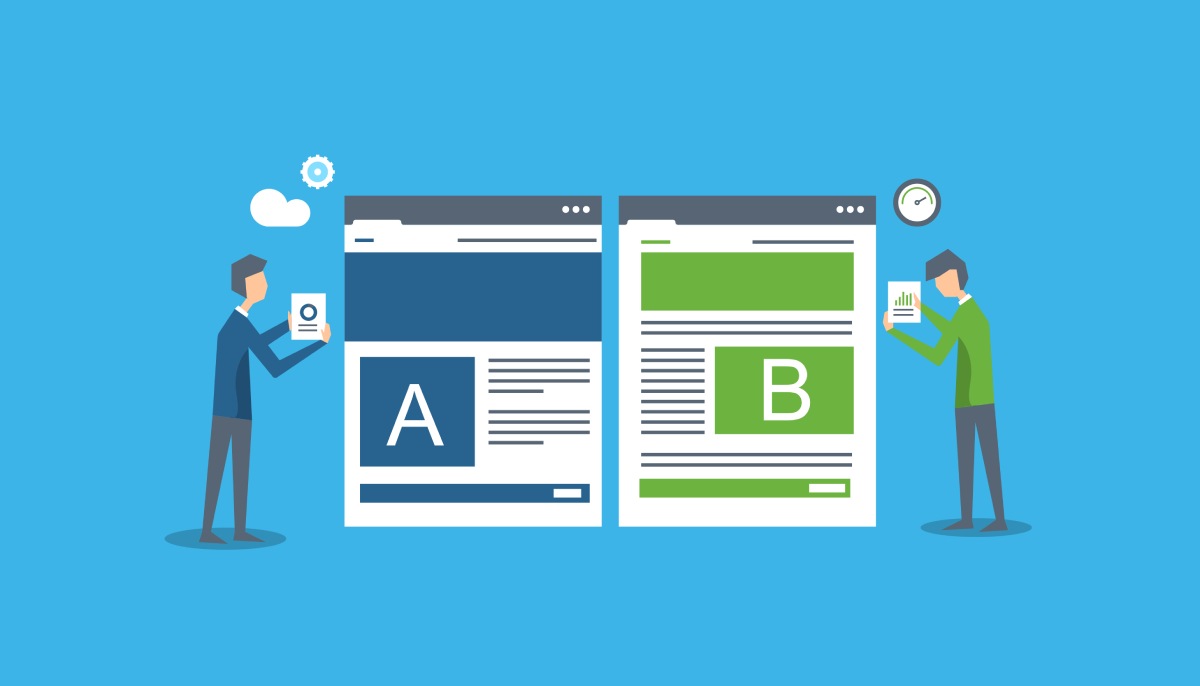
You don’t always need cheaper traffic; you often just need to convert the traffic you already have more effectively. If you can take a landing page converting at 2% and optimize the headline, button color, and social proof to make it convert at 4%, you have instantly cut your CPL in half without touching your ad campaigns.
- Tighten Your Keyword Match Types
If you are running search ads, broad match keywords are usually budget killers. You might be paying for clicks from people searching for informational definitions rather than transactional solutions. Shift your budget toward exact match and phrase match keywords with high commercial intent. Continually update your negative keyword lists to filter out junk traffic.
- Implement Strategic Retargeting
The vast majority of people will not fill out a form the first time they visit your site. Instead of paying full price to acquire a brand new visitor, use retargeting pixels to serve cheap, highly specific ads to people who have already engaged with your brand. Retargeting campaigns almost always yield a significantly lower CPL than cold traffic campaigns.
- Reduce Form Friction
Do you really need to know the lead’s fax number and company size on the first interaction? Every additional field you add to a lead capture form decreases the conversion rate. Ask for the absolute bare minimum (usually just Name and Email) to get them into your system, and use progressive profiling to gather more information later in the nurturing process.
Implementing Advanced Tracking for Inbound Marketing
As your inbound marketing efforts scale across multiple channels, simple calculation methods will eventually fall short of telling the whole story. You need to implement multi-touch attribution models to accurately assign financial value to every blog post, email sequence, and social ad a user interacts with before finally converting.
The standard CPL formula assumes a linear, single-step journey: User sees ad -> User clicks -> User becomes lead.
In reality, the modern buyer’s journey is messy. A user might find you via an organic Google search, watch a YouTube video a week later, and finally click a retargeting ad on Facebook to download your software trial.
If you use “Last-Click Attribution,” Facebook gets 100% of the credit for that lead, making your Facebook CPL look amazing and your SEO CPL look terrible. This leads to bad decision-making.
To become a true authority in your space, you must eventually graduate to multi-touch attribution models (like Linear, Time-Decay, or Position-Based attribution). These models distribute the cost and the credit across all the touchpoints. While the core “how do you calculate cost per lead” formula remains the same at a macro level (Total Spend / Total Leads), multi-touch attribution allows you to calculate the micro-CPL of individual channels with far greater accuracy, ensuring your budget is deployed exactly where it has the highest impact.
